First aid at work in the UK is an important responsibility for employers. But what does your business actually need to provide, and how do you know whether your current first-aid arrangements are adequate?
Whether you run an office, warehouse, construction business, school, retail environment or another type of workplace, understanding your first-aid responsibilities as an employer can help you make sure your team is prepared if an accident or illness occurs.
What are the UK first-aid requirements for employers?
Under the Health and Safety (First-Aid) Regulations 1981, employers must provide adequate and appropriate equipment, facilities and personnel to ensure employees receive immediate attention if they are injured or become ill at work.
However, there isn’t one fixed first-aid arrangement that applies to every UK business.
Instead, employers should carry out a first-aid needs assessment to determine what their workplace requires.
According to the Health and Safety Executive (HSE), this assessment should take factors such as the nature of the work, workplace hazards, workforce size and working arrangements into account.
This means that the first-aid provision required in a small office could be very different from the provision needed on a construction site or in a manufacturing environment.
What is a first-aid needs assessment?
A first-aid needs assessment is a review of your workplace to determine the level of first-aid provision that is appropriate.
Your assessment should consider factors including:
- The type of work your employees carry out
- Workplace hazards and risks
- The number of employees
- Working hours and shift patterns
- Holiday and sickness cover
- Lone or remote workers
- Previous accidents and incidents
- The location and accessibility of your workplace
- How quickly emergency medical services can reach you
- Visitors and members of the public
- The potential mental health needs of employees
The assessment shouldn’t be treated as a one-off exercise.
If your business changes significantly, it is sensible to review your first-aid arrangements to make sure they remain suitable.
How many first aiders does a workplace need?
One of the most common questions employers ask is: “How many first aiders do we legally need?”
There isn’t a single number that applies to every workplace.
The number and type of trained first aiders required should be determined through your first-aid needs assessment.
For example, a business may need to consider whether there is sufficient first-aid cover across different shifts, during holidays and when trained first aiders are absent.
Simply having one employee with a first-aid certificate may not provide adequate cover if that person works part-time, regularly works remotely or is frequently away from the workplace.
The important question isn’t just whether you have a first aider.
It’s whether your first-aid arrangements provide appropriate cover when you actually need it.
What first-aid training is available? There are several recognised levels of workplace first-aid training.
Emergency First Aid at Work (EFAW)
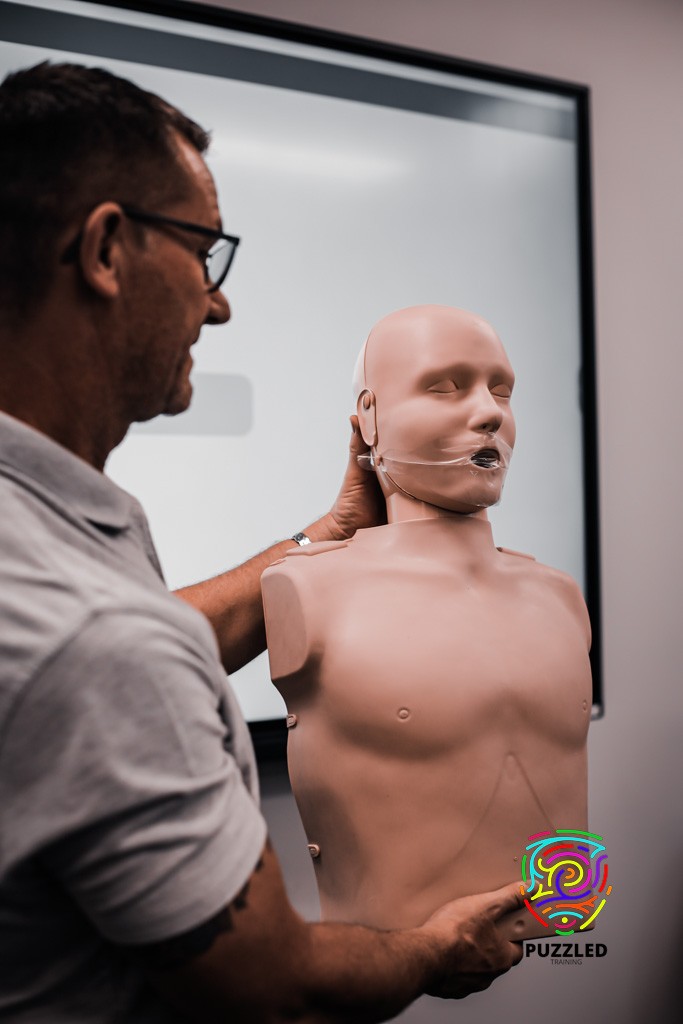
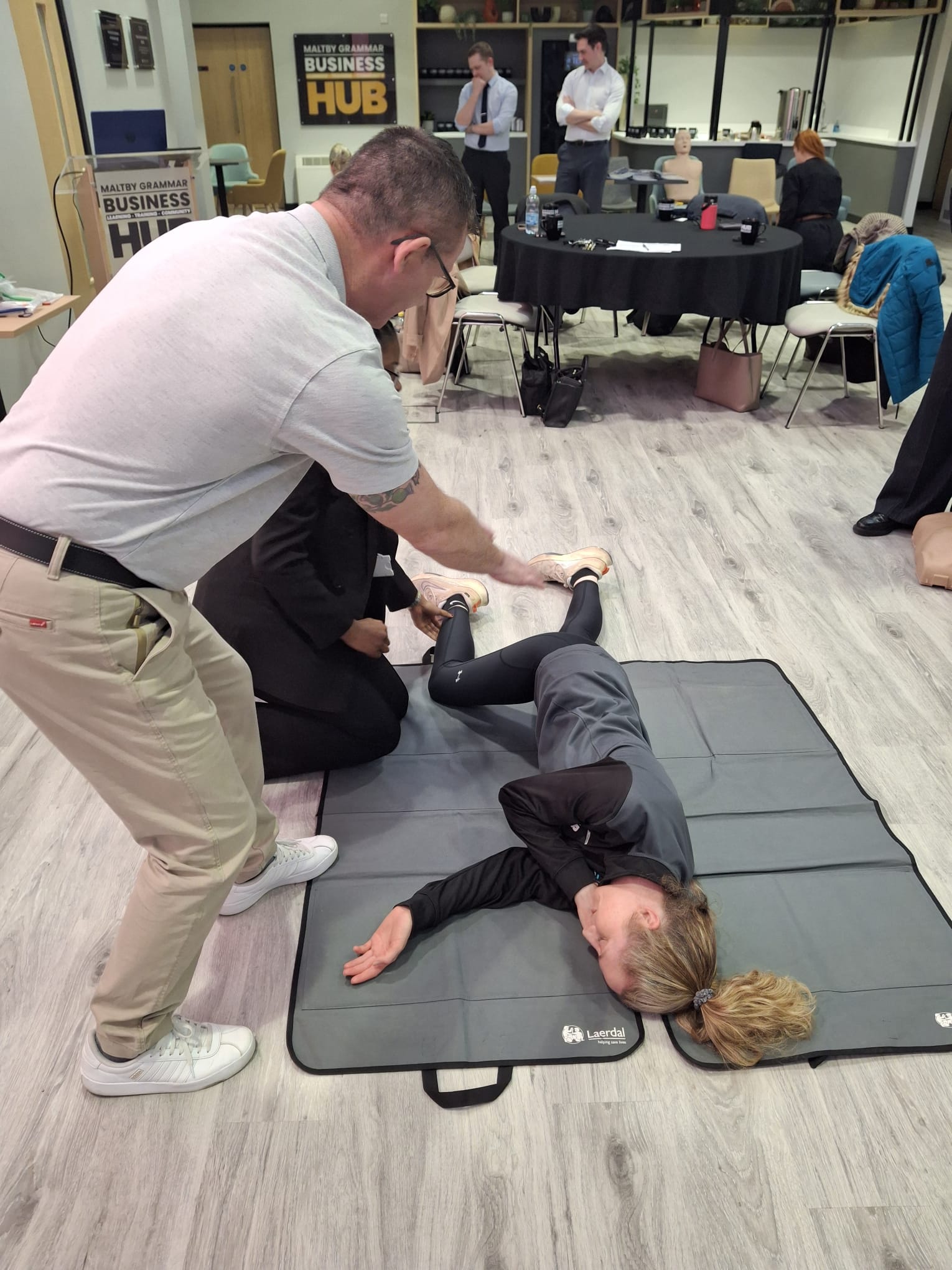
The Emergency First Aid at Work course provides learners with the knowledge and practical skills to respond to common workplace emergencies.
It can be suitable for lower-risk workplaces where a basic level of first-aid provision is appropriate following the employer’s needs assessment.
First Aid at Work (FAW)
The First Aid at Work qualification provides more comprehensive training and is designed for workplaces where a higher level of first-aid provision is required.
The appropriate course will depend on your first aid needs assessment and the risks associated with your workplace.
Additional first-aid training
Some workplaces may have specific hazards or circumstances that require additional training.
For example, businesses may need to consider risks associated with:
- Construction
- Manufacturing
- Working at height
- Machinery
- Chemicals
- Remote or lone working
- Large numbers of employees or members of the public
The key is to choose training based on the actual risks rather than simply choosing a course because it is commonly used.
How long does a first-aid certificate last?
Workplace first-aid certificates are normally valid for three years.
First aiders should complete the appropriate requalification course before their certificate expires.
HSE also recommends that first aiders undertake annual refresher training to help maintain their knowledge and practical skills.
This is worth considering because first aid isn’t simply theoretical knowledge.
In an emergency, a first aider may need to make decisions quickly and perform practical skills under pressure.
Regular refresher training can help maintain confidence and competence.
First aid and mental health in the workplace
Workplace first aid has traditionally focused heavily on physical injuries and medical emergencies.
However, the HSE’s current guidance also highlights mental health as something employers should consider when assessing their first-aid needs.
This doesn’t mean every organisation needs to provide the same type or level of mental health training.
Instead, employers should consider the specific circumstances of their workforce and whether additional support or training would be appropriate.
For many organisations, this is a useful opportunity to look at workplace wellbeing more broadly and consider whether their existing arrangements reflect the needs of their employees.
What about life-threatening bleeding?
Another important consideration for some workplaces is the risk of life-threatening bleeding.
The HSE’s guidance was updated to use the term “life-threatening bleeding” rather than “catastrophic bleeding” and provides additional guidance for employers where this is identified as a workplace risk.
This is particularly relevant for workplaces where employees could potentially be exposed to serious injury from machinery, tools, vehicles or other hazards.
Employers should consider these risks as part of their first-aid needs assessment and determine whether additional equipment or training is appropriate.
Is your first-aid kit suitable?
Training is only one part of effective workplace first aid.
Your first-aid equipment also needs to be suitable and accessible.
Businesses should regularly check that:
- Employees know where first-aid equipment is located
- First-aid kits are easy to access
- Supplies are adequately stocked
- Used or missing items are replaced
- Equipment remains appropriate for workplace risks
- First-aid arrangements are communicated to employees
A first-aid kit is of little use during an emergency if employees don’t know where it is.
What happens if your first aider is on holiday?
This is an easy question to overlook.
Imagine that your only trained first aider is away on holiday when an employee suffers an injury.
Would someone else be available to provide appropriate first aid?
This is why employers should consider cover and availability as part of their first-aid needs assessment.
Think about annual leave, sickness, shift patterns, remote working and other situations where your usual first aider may not be available.
Good first-aid planning means preparing for these situations before they happen.
When should you review your workplace first aid?
Your first-aid arrangements should be reviewed when circumstances change.
Consider reviewing your provision if your business:
- Moves to new premises
- Takes on more employees
- Introduces new equipment or machinery
- Changes working hours or shift patterns
- Starts employing lone or remote workers
- Experiences new types of accidents
- Changes its working processes
- Identifies new workplace hazards
Even if nothing major has changed, regularly checking your arrangements can help ensure your first-aid provision remains appropriate.
First aid isn’t just about compliance
Meeting your legal responsibilities is important, but effective workplace first aid is about more than ticking a box.
A trained first aider can provide immediate assistance while emergency services are on their way.
They can help an injured or unwell colleague feel calmer, provide appropriate first aid and potentially help prevent a situation from becoming worse.
Most importantly, good training gives people the confidence to act when action matters.
Is your workplace ready?
Take a few minutes to think about what would happen if someone became seriously ill or injured at work today.
Would your employees know:
- Who the trained first aiders are?
- Where the first-aid kit is?
- How to contact emergency services?
- What to do if the usual first aider isn’t available?
- Where is additional first-aid equipment located?
- What procedures apply to your particular workplace?
If you’re unsure about any of these questions, it could be time to review your first-aid arrangements.
Get workplace first-aid training with Puzzled Training
At Puzzled Training, we help businesses develop practical first-aid skills and give their teams the confidence to respond in an emergency.
From Emergency First Aid at Work to more comprehensive workplace first-aid training, we can help you identify the training that’s appropriate for your organisation.
Don’t wait until an emergency happens to discover that your workplace isn’t prepared.
Get in touch with Puzzled Training today to discuss your workplace first-aid training requirements.